How to make GMOs

Vandana Shiva, noted environmentalist in 2007,...
Image via Wikipedia

I’m sure you’ve come across the words GMO or generically modified organism at some point, but what does it really mean? Is genetically modified food truly safe for consumption?

My dear friend Taylor McNulty’s been working on a documentary about genetically modified food in India and how it’s adversely affecting the farmers there. She had an amazing opportunity to work closely with a physicist and environmental activist Dr. Vandana Shiva, who created Navdanya, a movement to “protect the diversity and integrity of living resources, especially the native seed, the promotion of organic farming and fair trade“.

To help us understand just how GMOs are made, Taylor asked me to create some simple animation to accompany Dr. Shiva’s explanation of the process. I agreed in a heartbeat. :) Check it out:


Thankful.

The aromas of roast turkey, baked pears and pumpkin cheesecake are wafting up the stairwell, along with fits of laughter, as my housemates work on cooking up a feast. It’s Thanksgiving day here in the US. Walk down the street and, just like on Chinese New Year in Singapore, you’ll find 99% of all stores closed. Folks travel far and wide to be home with their families. The dishes and conversations may vary across the country, but the basic human love and warmth remains the same. I’m a million miles away from home, but am fortunate to still be surrounded by friends.

As I venture through my 24th year on Earth, surrounded by fellow young adults all on uncertain paths, I often find myself either engaged in deep conversation, or lost in deep thought about life. Who are we? Where are we going? How did we get here? I know, without a doubt in my mind, that I have much to be thankful for.

  • For the ability to pursue my social issue documentary filmmaking dreams & make a decent living from doing it
  • For the mentors who guide me and look out for my well-being – Maria, JJ, Ines, folks at Kartemquin –  you know not how much you inspire me.
  • For the kindness and generosity of Seth and his team at Innovations For Learning, who’s sponsoring my work visa.
  • For the opportunity to spend all 4 of my Thanksgiving Days so far in great company. With Sam’s family in Wisconsin, Jane’s family in Maryland, friends/housemates at 1101 Garnett, and this year with Maria’s family.
  • For the friends I still get to see every so often, you keep me happy, grounded, loved and sane.
  • For the friends I don’t really get to see, because you’re far far away… you’re still in my heart. Wish I’d been able to communicate as much as I’d like to.
  • For my family. The unconditional love and support means a lot to me. It’s been 2 years since I’ve been home and I can’t wait for the next opportunity to visit.
  • And, of course, for you.

What are you thankful for?

Why it’s time to ditch disposable bottled water

When was the last time you bought a bottle of water from a store? How much did it cost you? A dollar? Maybe two?  How much would it have cost you to fill your own non-disposable bottle with tap water? $0.002.

Maybe you thought that with the pretty pictures of snow-capped mountains on the labels of these bottles, the water you purchased had to be from the clean, pristine streams of mountains from a land far far away and therefore worth the price. Sorry to burst your bubble. Nearly 40% of bottled water is simply filtered tap water. The bottled water industry is not only charging you almost two thousand times more for the water you can easily get from your running tap, but is also causing health problems for people who have to breathe in the fumes where these single-use plastic bottles are manufactured. Add that to the detrimental effect on the environment we have when we dispose of these bottles and they end up in landfills.

How is it then, that the average American drinks about 200 bottles of water a year? Convenience.

“I want water and I want it now.” so you walk into the nearest 7-Eleven to purchase one.

“I’m too lazy to carry my own non-disposable bottle around.” so you leave the house without one.

Well, i think the first step to change is to educate yourself with the facts. The Story of Bottled Water does a great job in 8 minutes explaining it.

[Youtube=http://www.youtube.com/watch?v=Se12y9hSOM0]
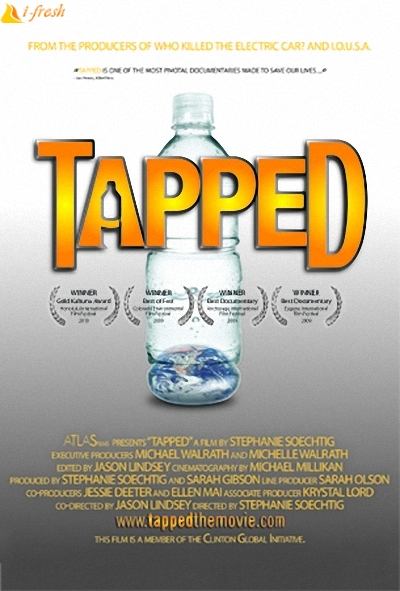
And if you’ve got time, catch the great documentary Tapped. I first saw it at the Talking Pictures Film Festival last year and was amazed by all the things about the bottled water industry i never knew. Think of it as the Food, Inc. movie for water.

And if you’re wondering now about which reusable bottle to get that’ll be safe, durable and eco-friendly, I highly recommend the stainless steel line from Kleen Kanteen. Not made from plastic, so you don’t have to worry about BPA leeching into your water. Not made from Aluminum, so you don’t have a liner that makes your water taste funky. Their factories practice fair labor standards, and 1% of all their sales go towards the planet. It’s a small sacrifice in convenience for a hundred times the benefit in return. Ditch that disposable bottled water today.

This entry was written as a part of Blog Action Day 2010, an annual nonprofit event that aims to unite the world’s bloggers, podcasters and videocasters, to post about the same issue on the same day to raise awareness and trigger a global discussion.

Great teachers change lives.


If you see only 1 more movie this year, make Waiting For Superman it.

I’ve been fortunate to have some great teachers in school. I’ve no doubt that it’s them i have to thank for where I am in life today. Who were your great teachers? Share your story.