Fighting poverty and pollution with one solution.

Two huge challenges facing us today are the ecological crisis we’re in and the social crisis of the widening gap between the rich and poor.

Van Jones of Green for All (and former Special Advisor for Green Jobs, Enterprise and Innovation at the White House Council on Environmental Quality ) suggests in the short video below that the solution to tackle both poverty and pollution is to build a green economy. With the increase in demand for green technology across the world, comes the increase in demand for labor. A lot of work needs to be done in retrofitting homes, and in harnessing alternative energy sources. A lot of people need work. Bring together the two and you get green collar jobs.

He also brings up the issue that our governments are currently partners to the polluters, war-mongers and incarcerators. They need to start partnering up with the problem solvers in the world.

[Youtube=http://www.youtube.com/watch?v=3IUVpwx23cY]

Is the solution that simple? What tangible steps can we take to get there?

Subscribe in a reader

Bookmark and Share

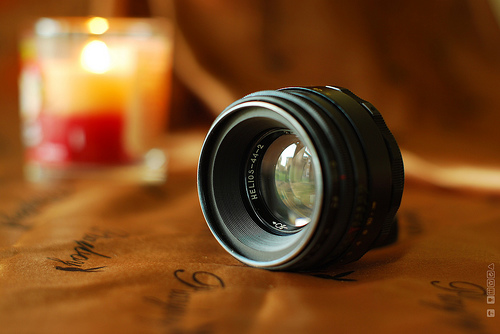
Too many f-stops?

Picture by DeusXFlorida

Not every f-stop on your lens churns out equally sharp and well-defined images. At least, that’s what I learned from John Sevigny’s article. Highlights below:

“A photograph shot at 1.7 relies on nearly all the glass in the lens, and any surface or engineering imperfections are going to be revealed with a wide-opened aperture. For the same reasons, I can probably forget about the idea of shooting at 2.8 if I’m looking for maximum sharpness and resolution.”

“On the other end, f16, the smallest aperture, is useless at 35mm or for DSLRs. Diffraction, a kind of distortion that happens when light passes through small holes, destroys images at f16. You might rule out using f11 for the same reason.”

“Don’t know the best aperture of your 35mm camera? Fall back on the old rule my father taught me back in the 1970s: the optimum aperture for sharpness and detail is about two stops away from wide opened. That is, on a lens with a maximum aperture of 2.8, you’ll probably get the best results at 5.6.”

Timely and useful advice. Matt and I were just involved in a discussion about this over the weekend while we were shooting State of the Apartment on the Canon 5D Mark II. Now we know better. :)

Read the full article here.

Subscribe in a reader

Bookmark and Share

Singapore and climate change.

21 youths from ECO Singapore had the chance to engage in important dialogue with Singapore Prime Minister Lee Hsien Loong at COP15.

What is a small country’s place in the world during these times? With no natural resources, how might we find alternative energy sources? Is imposing higher carbon taxes really a viable option? What kind of impact will our eco efforts have on the economy and Singapore’s ability to remain competitive?

Learn more about Singapore’s stand on the environment and our climate change policies through their two-part video.

[Youtube=http://www.youtube.com/watch?v=Kxfbnyd8NLQ]

[Youtube=http://www.youtube.com/watch?v=K5D3Z0ltGLE]

Read more about ECO Singapore’s experience at COP15 here.

Subscribe in a reader

Bookmark and Share

Depth of Field Master

Canon EOS 5D Mark II

In my search to download and print a depth of field table for reference during our shoot for State of the Apartment, I discovered a brilliant website that’ll make things a whole lot easier.

The online Depth of Field Calculator by DOFMaster! Yay!

No need to spend precious time scrutinizing the endless numbers on the charts, trying to match up the right focal length with the f-stop. Just choose your camera model, focal length, f-stop and subject distance from the drop-down menus, hit ‘calculate’ and presto! You know exactly how much of your visuals will be in focus and at what distance. Sweet.

But wait, there’s more! They’ve even got the app for the iPhone… *gasp*… perfect for outdoor shoots. Thank goodness for people who develop software like that. :)