People protect what they love…

“We can’t protect what we don’t yet understand” – Jacques Cousteau

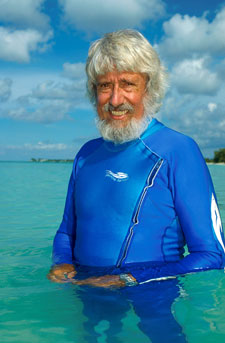
That was my big takeaway from watching Jean-Michel Cousteau’s presentation The Other 70%: Understanding the Earth’s Underwater Ecosystems on this 40th Anniversary of Earth Day. He spoke to a packed auditorium at Northwestern’s Pick Staiger Hall, sharing his life passion for ocean exploration and conservation.

He told the story of how he was first “thrown overboard” by his father at age 7, and how he now has his two children working alongside him to inspire and educate people around the world about the need to maintain a sustainable ocean.

Sharing multiple clips from his PBS/KQED series “Jean-Michel Cousteau Ocean Adventures“, he was able to illustrate with vivid imagery the beauty that lies in the depths. Through watching them, I understood how our actions were seriously endangering the existence of our wild turtles, sharks, birds and whales. I also learned about Jean-Michel’s role in influencing President Bush’s 2006 decision to designate the North Hawaiian Islands Marine National Monument to preserve 138,000 square miles of ocean.

But the clip that truly resonated with me was one which depicted 5 people across a spectrum of ages and diets getting tested for the presence of toxic substances in their bodies. The cameras were rolling as each person in the study was told the test results for the first time. The emotion captured on their faces was incredibly moving. You could totally see the shocking realization of how great an impact our environment and diet can have on our health. After the initial tears, came the renewed determination to protect and prevent others from suffering the same consequences.

And that, to me, was a step in the right direction following a higher level on understanding. Jacques was right. We can’t protect what we don’t yet understand. I’ve seen this ring true in my life too. The conscious lifestyle choices I make today are the result of me learning and gaining more knowledge about environmental and sustainable food issues. Knowledge is power, indeed.

Happy 40th Earth Day. :)

Subscribe in a reader

Bookmark and Share

Singapore to take the spotlight at MIPTV in Cannes

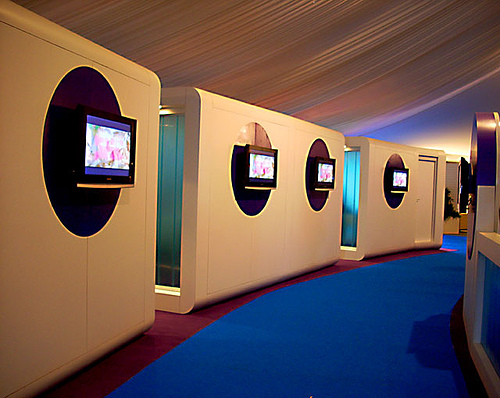
At MIPTV. Photo by ulybug

Come April 12-16 at MIPTV, one of the biggest market places for the sale and purchase of television content worldwide, Singapore will be the Country of Focus and have the honor of hosting a half-day conference to promote our local content and services.

Making the trip with the largest contingent of 14 media companies there, will be MIPTV’s Guest-of-Honor and the island-city’s Acting Minister for Information, Communications and the Arts, Lui Tuck Yew.

Click here to read the full article from PR Newswire.

That’s such exciting news from home!  And congratulations to MDA for the great work in pushing our local content to the world. I’d love to see what one of these conventions is like, but the $1.3K price tag makes that impossible right now. Perhaps I’ll get my chance in future. In the meantime, though, I look forward to hearing good news from the team heading to Cannes soon! :)

Transcription software of my dreams.

Oh my word! After having spent hours upon hours transcribing the massive number of interviews that we’ve had coming in at KTQ (4 docs currently in production!), the discovery of MacSpeech’s new release is music to my ears.

Introducing…

MacSpeech Scribe will turn your digital audio file into text! I’ve known about speech-to-text softwares out there, but even those would need us to listen to our interview clips and repeat each sentence for it to be transcribed. And because I’m poor, I’ve been using InqScribe, which allows you to play your clip in the same window as where you type your text. Doing it manually typically takes me an hour to transcribe 15 minutes of interview. I’m pretty sure that MacSpeech Scribe will enable my work to get done at least 4 times as fast!

Good things do cost money though. MacSpeech Scribe is available for purchase at $150 and requires that your Mac be running Snow Leopard. Certainly a worthwhile investment for all documentary production companies, in my opinion! :)

Added on Mar 31: Mmm, upon further research, it looks like the early adopters of the software have been complaining about the poor post-purchase customer support. Looks like MacSpeech still has some bugs to clean out. Probably a wise idea to wait till they release an update!


Subscribe in a reader

Bookmark and Share

Ideas worth spreading: TED Prize winner Jamie Oliver

If you’ve read my previous post on feeding the next generation right, you’ll know that I’ve got great respect for the work that TED Prize winner Jamie Oliver is doing. With TED bringing together the biggest movers and shakers of the country last week, Jamie was there to speak to them with the heart and conviction to educate us all about the very things we put in our mouths.

Learn in 20 minutes what could potentially save thousands of lives. These ideas are truly worth spreading:

It’s really not difficult to stay away from greasy, fatty fast food and sugar-laden soda. For most of us, at least. But for those who live in areas like Chicago’s 3 food deserts, access to fresh produce is very limited. I can see why, with dollar-burgers and dollar-tacos just around the corner, it’s tempting to opt for the faster and cheaper alternative. But when you think about the long-term health implications, these cheap alternatives could cost you so much more in medical bills. However, when you live in a food desert and don’t have a car, taking that one bus that runs through the entire neighborhood 2 hours to a grocery store just isn’t feasible. The only options nearby? Fast food joints and corner drug stores with shelves filled with soda and candy, and where your protein comes in the form of a can of spam. It’s hard to believe that this situation exists in a city like Chicago. What the City officials need to do is work on getting more stores selling fresh produce in these areas.

Add organic food and responsibly-produced food to the mix, and you’ll realize that the benefits reaped – both for yourself and for the environment – are well worth the few extra cents you pay.