It was a night of tremendous fun at the sold out Chicago Premiere of Kartemquin’s Typeface. Spirits were high and excitement was buzzing at the Gene Siskel Film Center as guests had the opportunity to mix and mingle with Typeface producer and director Justine Nagan, as well as some of those featured in the film.
The Dark Knight, What Women Want, Ocean’s 11, Spiderman 2, The Break-up, The Time-Traveler’s Wife and Public Enemies. These were some of the decade’s best movies we enjoyed, bathed in the beautiful landscape and architecture of The Windy City. But according to theChicago Film Office, 2009 marked the lowest number of feature films shot in Chicago in eight years. And with Oprah’s big announcement that she was gonna leave, those of us in the industry had plenty of reasons to worry.
Well, here comes the good news. Areport from Reel Chicagojust announced that 3 major productions have chosen Chi-town for their shoot in the coming months.
Fox Television’s cop drama Ridealong slated to begin filming in March
Vince Vaughan and Ron Howard’s comedy Your Cheating Heart planned for an April/May shoot
And possibly even Transformers III in May
The announcement comes like sweet, sweet raindrops to mark the end of the city’s 19-month major studio picture drought. Hooray! Time to get that reel and resume ready.
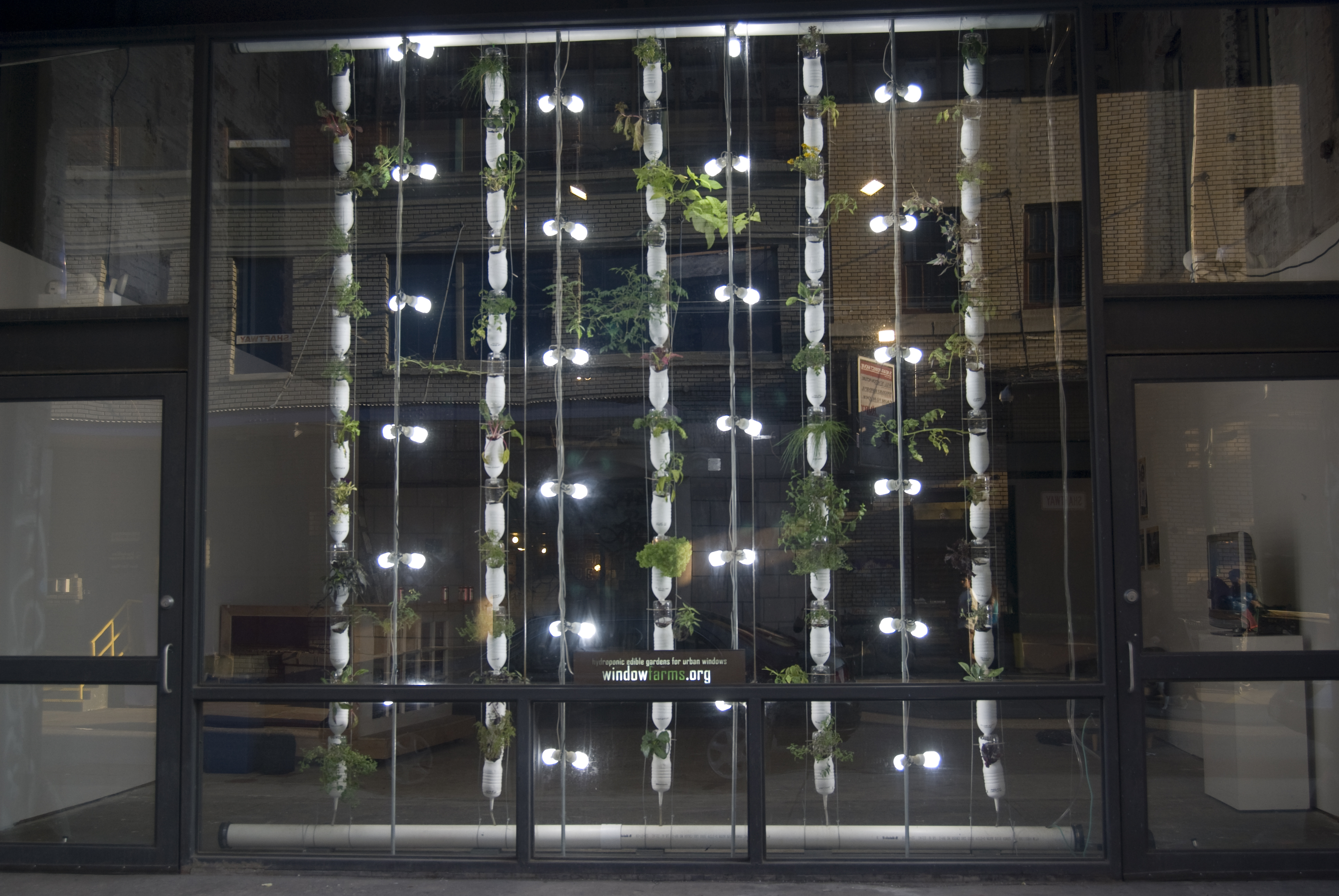
Big window farm at Eyebeam, July 2009. Photo by Lindsey Castillo.
I’m a city girl. I grew up in a place that was pretty much a concrete jungle. And until I was 21, the only farms I’d seen were those on my computer screen when I played Sim Farm. That probably explains why I stared in wide-eyed wonder as Sam drove me around the vast farmlands of Wisconsin. I was so excited that the barns, silos and haystacks looked just like the images painted in my mind by the virtual game!
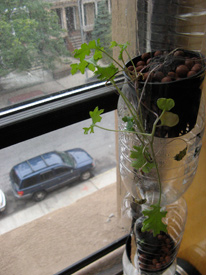
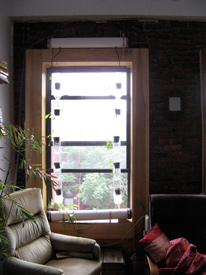
Gabriel Willow's Window Farm, July 2009. Photo by Gabriel Willow.
When I was working on the documentary for Project Green Heals, where we followed 98 high school students on their journeys to learn about urban agriculture, I learned about the great benefits of having food grown close-by. Food grown locally:
doesn’t have to be transported over hundreds of miles, so you save on gas and energy.
gets to you faster, so it hasn’t lost as many nutrients.
has no need for harmful chemical preservatives to keep them looking good longer.
Just like Singapore though, Chicago is a bustling city where buildings fill almost every square foot of the area. Without the huge plots of land, many believe it’s impossible to grow our own food. Fortunately, there are groups out there working to prove that it can be done. Uncommon Ground has turned one of Chicago’s many flat roofs into the country’s first organic rooftop farm.
Gabriel Willow's Window Farm, July 2009. Photo by Gabriel Willow.
The Jane Addams Hull House turned a small plot of land right in the middle of the city into an urban farm, growing enough food to run its soup kitchen to feed the hungry.
But what if you don’t own a restaurant or you’re not part of a large organization? What can we, as regular individuals, do about it?
Window Farms could be the answer. Imagine being able to grow food, right in your own apartment window.
Window Farms are vertical, hydroponic, modular, low-energy, high-yield edible window gardens built using low-impact or recycled local materials.
Learn in less than 3 mintues what it’s all about:
Made from recycled bottles, decorative and food bearing. I find that pretty darn cool. I’d definitely love to give growing my own food a shot in my future home. Has your family ever been into home gardening? What are your thoughts on the Window Farms?
When Oprah rocked the world with the announcement of the final season of The Oprah Winfrey Show come 2011, a huge grey cloud loomed over many a Chicagoan’s mind. What will the media giant’s departure mean for the city and its people? Will her employees and local suppliers be left stranded and lose their source of income?
Well, the good news is, Harpo Productions is here to stay. In an article on Ruth L. Ratny’s ReelChicago.com, it states that:
“Harpo Productions plans to develop and produce new and continuing shows for syndication, prime time, cable, digital, radio and emerging platforms from Chicago.
The transition to a large assortment of content produced out of the Washington St. studio will be a huge boon for the local industry.
To everyone’s relief, it won’t suffer the loss of millions of dollars worth of annual Harpo business that might have left with Oprah’s departure.”
I guess that means good news for production peeps like me too. With the focus moving from a single show to an entire network, The Oprah Winfrey Network is bound to lead to the rise in demand for content to fill their slots… 24 hours a day, 7 days a week… you can do the math.
Add that to the stringent content selection process I’m sure she’ll put in place to maintain the positive image of her brand, the content demanded will likely be right in line with the type of production I’m passionate about – social issue media. Nice. Content on air really doesn’t always have to be about sex, drugs and violence. Whether or not I’ll still be in the city to witness these changes, I’m glad that there’ll at least be more positivity on television.



 Shuling Yong